Order Now

Squadron
Formation
World War I
'A' Flight of 31 Squadron formed at Farnborough on 11 October 1915. Soon afterwards the men sailed for Bombay, arriving on Boxing Day. Further Flights formed at Gosport, joining 31 at Risalpur by May 1916. This first operational military unit in Indian skies was soon in action along the North West Frontier, assisting the army in dealing with tribal unrest. Its BE2c biplanes were employed on artillery observation, reconnaissance and ground attack.
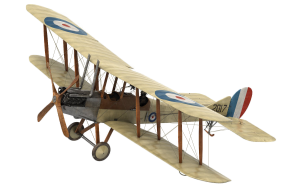
1915
The Inter War Years
WWI's end brought little change to the routine. Equipped now with Bristol F2B Fighters, 31's army co-operation role was to continue for the next two decades. Emerging air power in the hostile Frontier region led to the Squadron's decisive involvement in the Third Anglo-Afghan War in 1919, and air policing proved an effective method of keeping skirmishing under control. Bases changed regularly as operations dictated. The most permanent was Quetta, but the Squadron suffered many fatalities there in 1935 when a massive earthquake struck the area.
31 had re-equipped with the Westland Wapitis in 1931, but 1939 saw a change of role. Following conversion to ancient Valentia twin-engined biplanes, the Squadron assumed the mantle of the existing Bomber/Transport flight at Lahore.
1939
World War II
'The outbreak of WWII saw the Squadron's Frontier work continuing, although strategic transport tasks were added. But during 1941, 31 saw action in Iraq, Syria, Iran and Egypt. Initially this involved Valentias, but receipt of Douglas DC2s brought a significant upgrade, as well as concentration on purely transport duties. 31 subsequently continued until 1947 with the Dakota family, re-equipping in turn with Douglas Dakota DC-3 and C-47s.
The Squadron flew in Burma from early 1942, valiantly supporting the Fourteenth - the 'Forgotten Army' - until the Japanese were evicted in 1945. Duties were re-supply, air-drop, and casevac. Operating in monsoon conditions, largely from Indian bases, 31 suffered many losses. The Squadron supported Chindit raids, the epic battles of Kohima, Imphal and the Arakan, as well as 'Hump' runs across the eastern Himalayas to China.

1941
Post World War II
After Japan's surrender, 31 moved to Java to transport released internees and POWs from jungle camps to repatriation centres. This humanitarian mission evolved into combat as the Indonesian independence movement gained momentum, and the Squadron suffered many casualties. Indeed a number of its personnel were murdered near its base at Kemajorang.
Java operations ended in autumn 1946, and the Squadron reformed near Karachi. During religious and ethnic unrest associated with Indian independence and partition, thousands of refugees were transported. From Independence Day, 15 August 1947, the Squadron's base at Mauripur found itself in newly-formed Pakistan.
With its task completed, the Squadron disbanded at the year's end. But in July 1948, 31 reformed at RAF Hendon, its first home base since 1915. Equipped with Ansons and Devons, the Squadron flew communications and air ambulance duties. Spitfires, Proctors and Chipmunks were also available, both for communications and to keep staff officers in current flying practice.
1948
The Cold War
In 1955 31 returned to the front line at RAF Laarbruch in Germany, operating Canberra PR7s. Assigned to NATO, the Squadron specialised in reconnaissance until 1971, when it moved to RAF Brüggen and re-equipped with the Phantom FGR2. This brought a change to strike/attack, a role retained through successive re-equipments with the Jaguar GR1 in 1976 and the Tornado GR1 in 1984. As well as maintaining a conventional capability, 31 remained a part of NATO's deterrent force until, following the collapse of the Soviet Union and the Warsaw Pact, the RAF's nuclear weapons were withdrawn.

1955
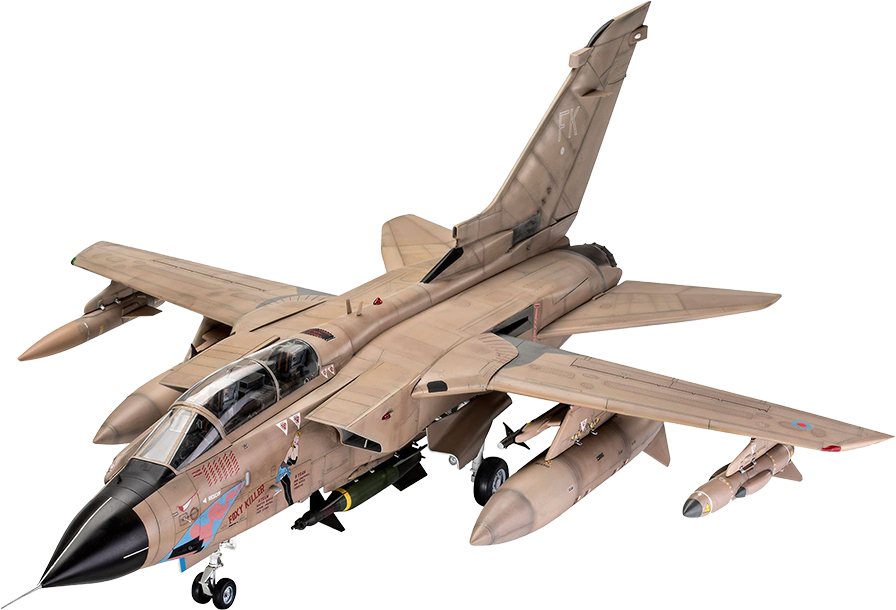
Gulf War I
Despite the thawing of the Cold War, operations occupied 31 for upwards of twenty years from the time of the 1991 Gulf War I (Op Granby). During that conflict, OC 31 led the Tornado GR1 contingent at Dhahran, Saudi Arabia, which comprised not only 31 but also elements of five other Squadrons.
1991
Op Endgadine
Middle-Eastern air policing continued, and in 1999 31 also participated in air operations over the Former Republic of Yugoslavia. Operating in the interdiction role, these missions were flown both long-range from Brüggen and from Solenzara, Corsica.
1999
RAF Germany Closes
With the withdrawal of RAF forces from Germany, the Goldstars (as 31 was coming to be known) came home again, this time to their current location at RAF Marham. In August 2001, 31 was the last RAF Squadron to leave Germany.
2001
Op Telic
Air policing operations continued from Ali Al Salem airbase in Kuwait, escalating into the Iraq War of March 2003 (Op TELIC). During this, the Squadron formed the core of the Tornado GR4 Combat Air Wing and, as in 1991, 31's CO found himself in the lead. Following cessation of these hostilities, the Squadron continued its approximately annual army support deployments, latterly to Al Udeid, airbase in Qatar, as allied forces continued their mission to stabilise Iraq until 2009 when the GR4 force with drew from Operation TELIC.

2003
Op Herrick
Almost as soon as the Tornado GR4s were released from the Gulf in 2009, they were assigned to Afghanistan (Op Herrick). And, until the final pull-out of British combat forces in 2014, regular deployments to Kandahar were performed in support of multi-national International Security Assistance Force operations. These were designed, inter alia, to reduce the threat to the West from Afghanistan-based terrorist organisations. They offered challenging work, not least in view of the continued imperative to improve capability while achieving economies. Almost symbolically, the Goldstars were the 'Last in Afghan Skies', operating in the same theatre and army support role in which the Squadron grew up almost a century ago.
2009
Op Shader
With the withdrawal in 2014 from Afghanistan came no rest, for the Squadron was almost immediately assigned to Operation Shader. The Goldstars were detached forward to RAF Akrotiri in Feb 2015 to support the international effort to contain ISIL (Islamic State of Iraq and Lebanon - also known variously as IS and ISIS) aggression in Syria and Iraq. The Squadron carried out duties on Operation Shader until it's disbandment.
2015
Disbandment
No. 31 Squadron was disbanded on 14 March 2019 at RAF Marham and will reform sometime around 2024 at RAF Waddington, Lincolnshire, equipped with up to sixteen General Atomics MQ-9B, a remotely piloted air system (RPAS), which will be known as the Protector RG1 in RAF service.
2019
Sqn Stand -Up
31 Squadron is due to stand-up with the Protector RG1 on the 11th Oct 2023 at RAF Waddington. Les amendment

2023